A Run Through Melbourne, A Walk with Mary MacKillop

I was very fortunate last week to attend a symposium on Catholic Identity in schools at the Australian Catholic University in Melbourne. I was even happier to have the opportunity to stay at the Mary MacKillop Heritage Centre, which is just around the corner from the university, overlooking Fitzroy Gardens. This is a lovely quiet, reflective space that invites the visitor to encounter the mission of the Josephite sisters.
Although it is a Heritage Centre and has accommodation now, it was established as ‘St Joseph’s Providence’ – a house dedicated to supporting women in the early twentieth century who were destitute. Many had left abusive homes, were deep in poverty and helpless. It was one of many “providence houses’ supported by St Mary and her sisters in inner-city Melbourne at this time.
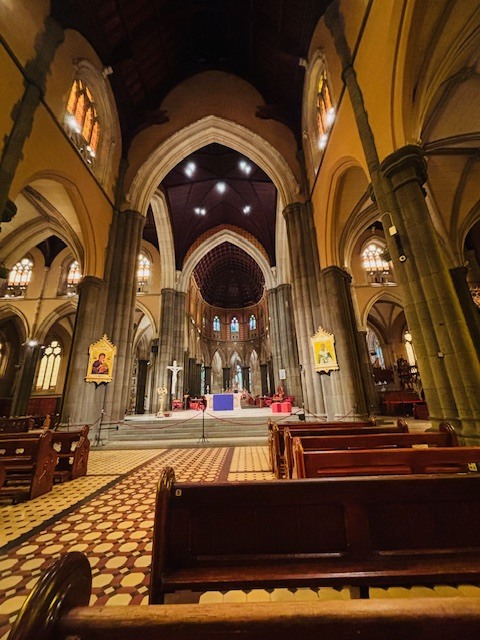
As is my habit when I must stay away from home, I went for a run through the city. My physique and temperament don’t make me a natural runner – but I do my best. My route took me past (and briefly inside) St Patrick’s Cathedral. It really is a grand building. I was struck by the contrast between its grandeur and the humility the initial inhabitants of St Joseph’s Providence House must have felt.
The two buildings are only about 300 metres apart. The cathedral stands as a powerful symbol of faith and endurance, yet the mission of the providence houses reminds us that the Church is built just as much through quiet acts of compassion as it is through stone and spires.

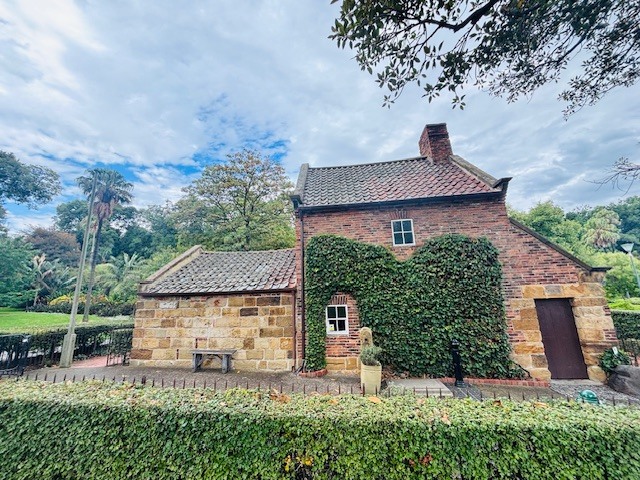
From there, my run continued past landmarks that speak of Melbourne’s identity and energy — Captain Cook’s Cottage, the MCG, Rod Laver Arena, and AAMI Park. These are places of gathering, achievement, and shared story where thousands come together, united by hope, loyalty, and passion.
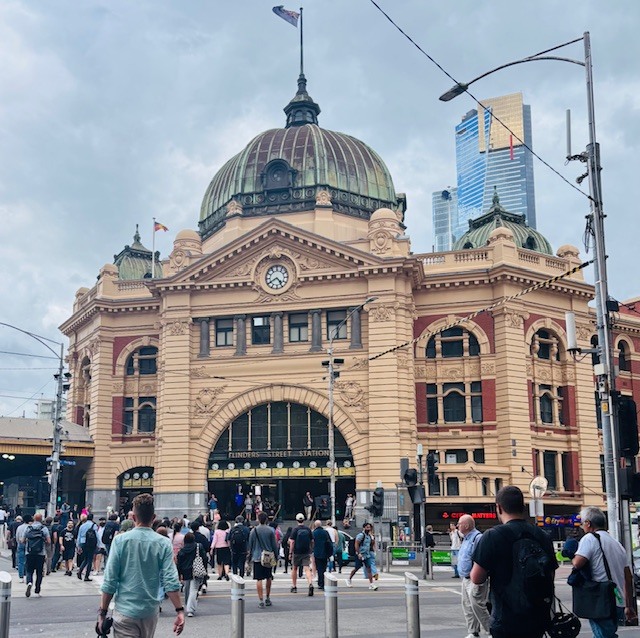
I Followed the curve of the Yarra River for a few kilometres and passed behind then in front of Flinders Street Station. By then it was well into clocking-off time and I was dodging and swerving office workers rushing to trams and trains. People moved with purpose, each carrying their own stories, burdens, and hopes. St Mary MacKillop’s genius was her attentiveness to such people — especially those on the margins.
I detoured slightly onto Little Lonsdale Street. This was the centre of a place of extreme poverty in the late 19th century known as ‘Little Lons’. St Mary returned to Melbourne at the invitation of Archbishop Thomas Carr in 1891. In his letter of welcome, he wrote that while the need in Little Lons was overwhelming, one would have to live in the area to do anything worthwhile.
He wouldn’t ask the sisters to live there. Predictably Mary replied, ‘Of course I have no objection to the locality, it is there that the real work lies.’ She and Sister Gertrude moved into two small adjacent houses, one still under repair. They named it ‘Providence’; this was a name the Josephites coined when they had no idea where the money would come from. God would have to provide.
Sisters Mary and Gertrude would beg for food and donations of money. They found good hearted people among the Little Lons residents. Within weeks they gave shelter to homeless out-of-work servant girls, dispensed soup and clothing in the backyard, and taught ‘night school’ for children who worked as cheap labour during the day. Mary’s sister Annie MacKillop, wrote after staying for a few days at the Providence, ‘It was a dreadfully noisy place—women screaming at night used to be so awful I thought it was murder’.
I ran just over 7km. Obviously, this is now the gentrified space of a pretty wealthy and cosmopolitan city. It was pleasant (as pleasant as I can possibly find running), clean and safe. It does not take too much imagination though to consider how different and difficult the mission of those early sisters would have been. We work hard to contextualise her mission to our lives today and ensue that we secure our own places of providence for the needy, vulnerable and excluded.
Mary’s ministry was grounded in these very places, among those whom society too often overlooked. And of course, a commitment to be where ‘the real work lies'.
Chris Gabbett
College Principal